Concept illustration

For investors, tenants, government and partners

Build with Bolo.
On land that will never be sold.

The Iwokiri Gateway: a marine gateway, riverside town and marina on community-owned land on the Bonny River, minutes from Onne port and the heart of Nigeria's LNG exports. We are looking for partners for the long term.

573 ha
in the Iwokiri Gateway vision
3.4 km
by boat to Onne port
75%
of the land kept as mangrove
0 ha
for sale. Ever.

The proposition

The community is the developer.

Most waterfront projects begin by taking land away from the people on it. Iwokiri begins with them. The Bolo Community has drawn up its own plan, will keep its land, and is inviting partners to build and operate the parts it cannot build alone.

A working river

Frontage on the Bonny River, close to Onne, one of Nigeria's main ports for oil, gas and marine logistics. The water is the road.

One clear owner

The land belongs to the Bolo Community. A Community Trust and the community's own company are being set up in Stage 0, so partners will deal with a single, organised counterparty.

A plan in sequence

Blue economy first, then a marine yard when a tenant signs, then a small town. Every stage must stand before the next begins.

Why here, why now

Beside Nigeria's energy gateway.

Iwokiri sits on the Bonny River, the channel that carries most of Nigeria's LNG and much of its oil to the world, a short boat ride from the Onne free zone.

200+

companies from 45 nationalities licensed in the Onne Oil and Gas Free Zone, across the water from Iwokiri.

Source: OGFZA ↗

22 → 30

million tonnes a year: Nigeria LNG's capacity at Bonny once Train 7, reported over 90% complete in 2026, comes on stream.

Source: Kpler ↗

7th

largest LNG exporter in the world in 2025: Nigeria shipped 14.78 million tonnes, most of it through the Bonny River.

Source: ThisDay ↗

200 ha

of land reclaimed at Onne between 2011 and 2014, with sand dredged from the Bonny River. The method is proven next door.

Source: Boskalis ↗

37.9 km

Bodo–Bonny road, opened in November 2026, ending Bonny Island's isolation and reshaping access across the estuary.

Source: ThisDay ↗

4

south-south ports, Onne among them, approved for upgrade by the Federal Government in September 2026.

Source: Premium Times ↗

Iwokiri is a support and gateway site for the Bonny–Onne corridor, not a rival to Onne port. Figures are from public sources, checked November 2026.

The vision, stage by stage

What Iwokiri could become.

Concept illustrations of the plan in order. They show intent, not designs: every building waits for survey, studies and the community's approval.

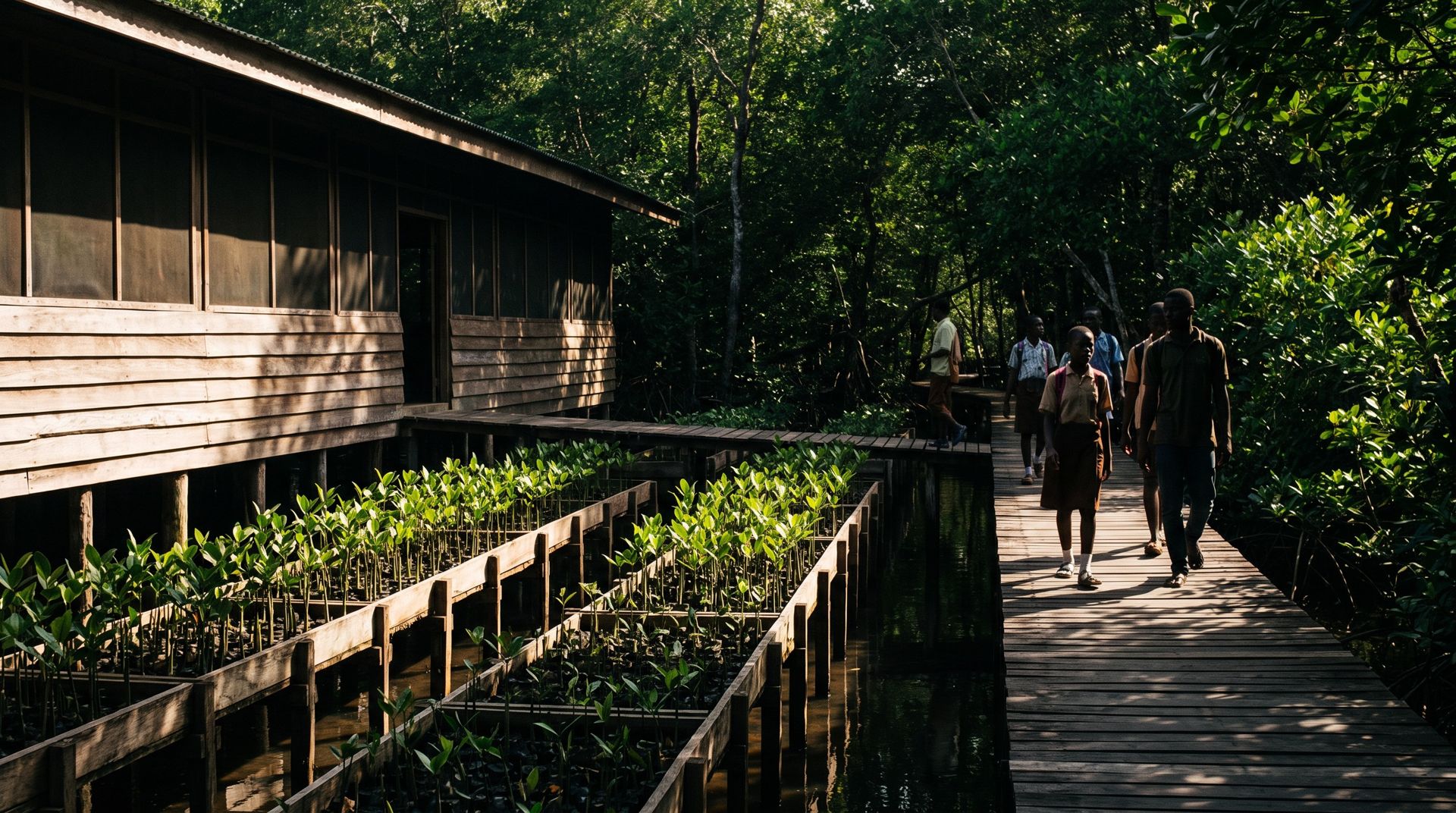
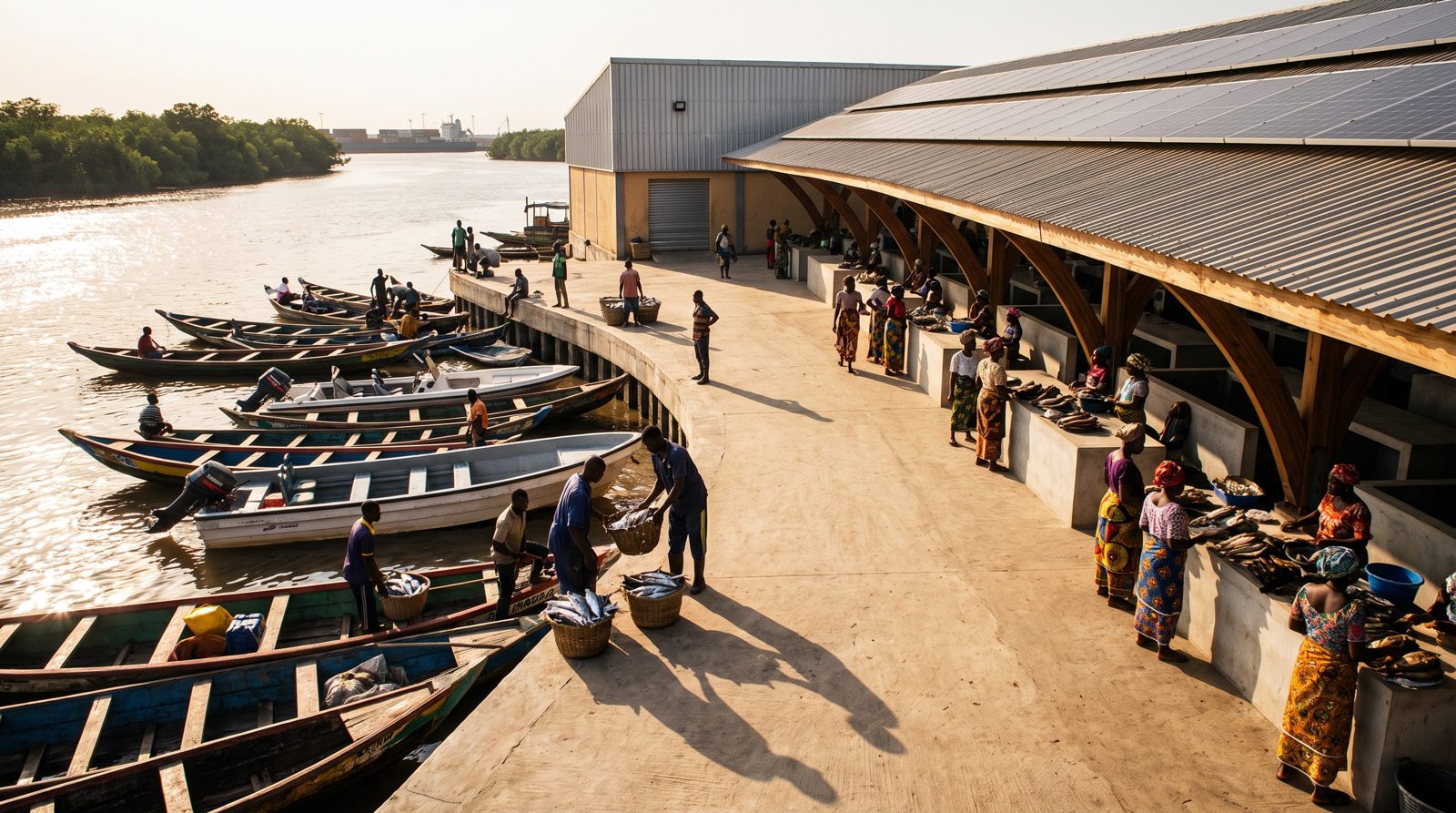
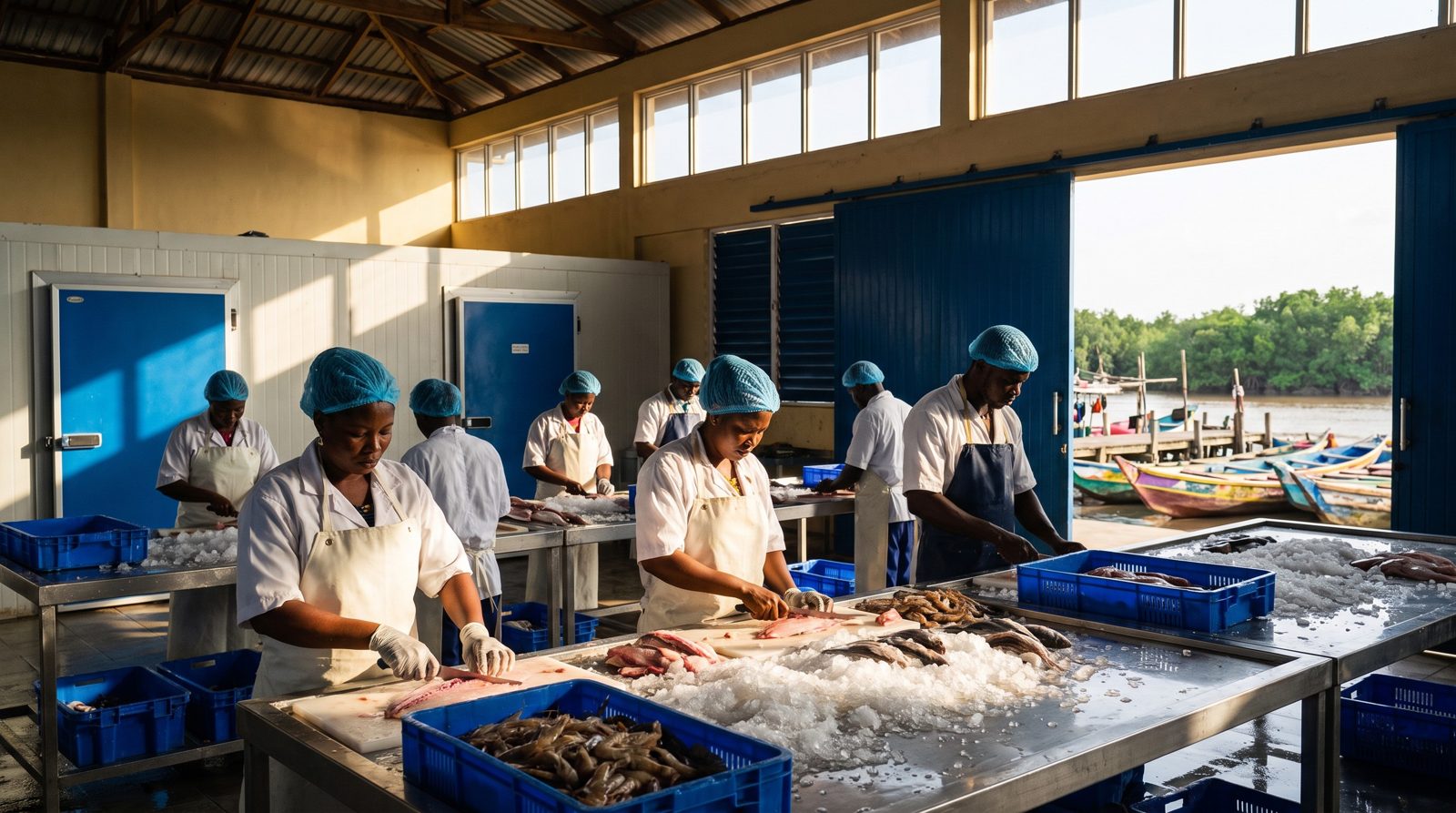
Fishers' Harbour and Seafood Hub, concept illustration
Phase 1Fishers' Harbour and Seafood HubConcept illustration
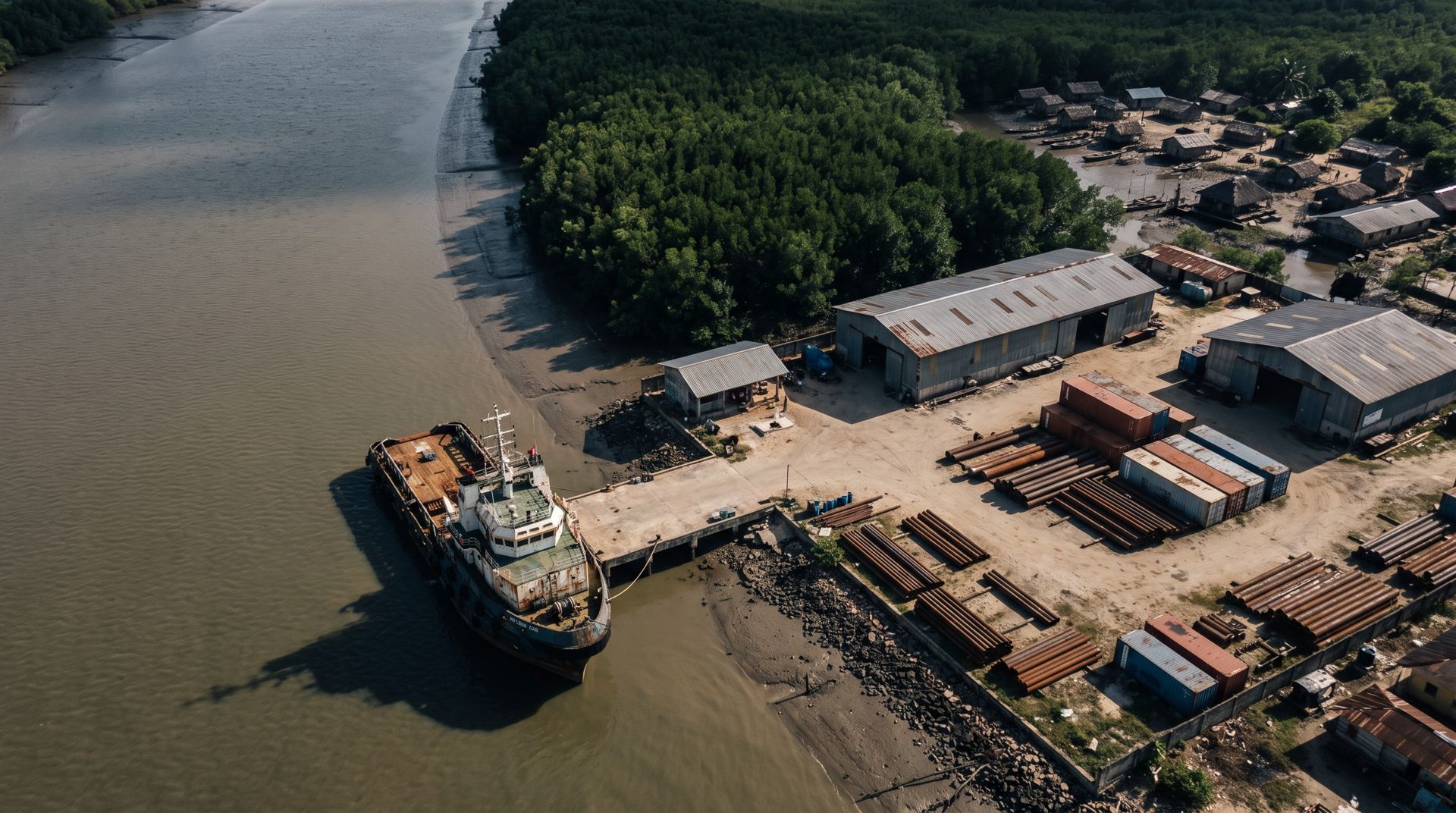
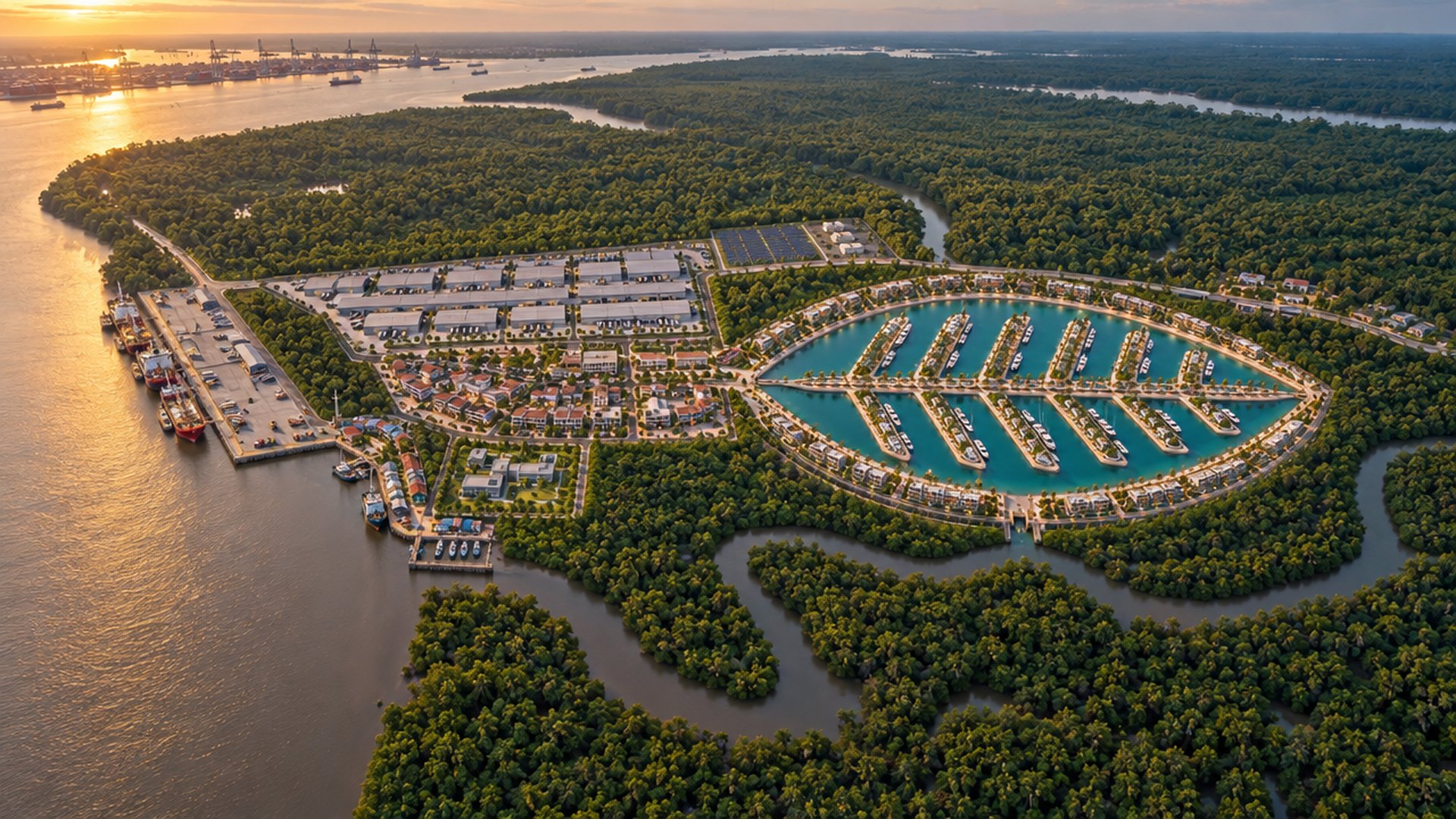
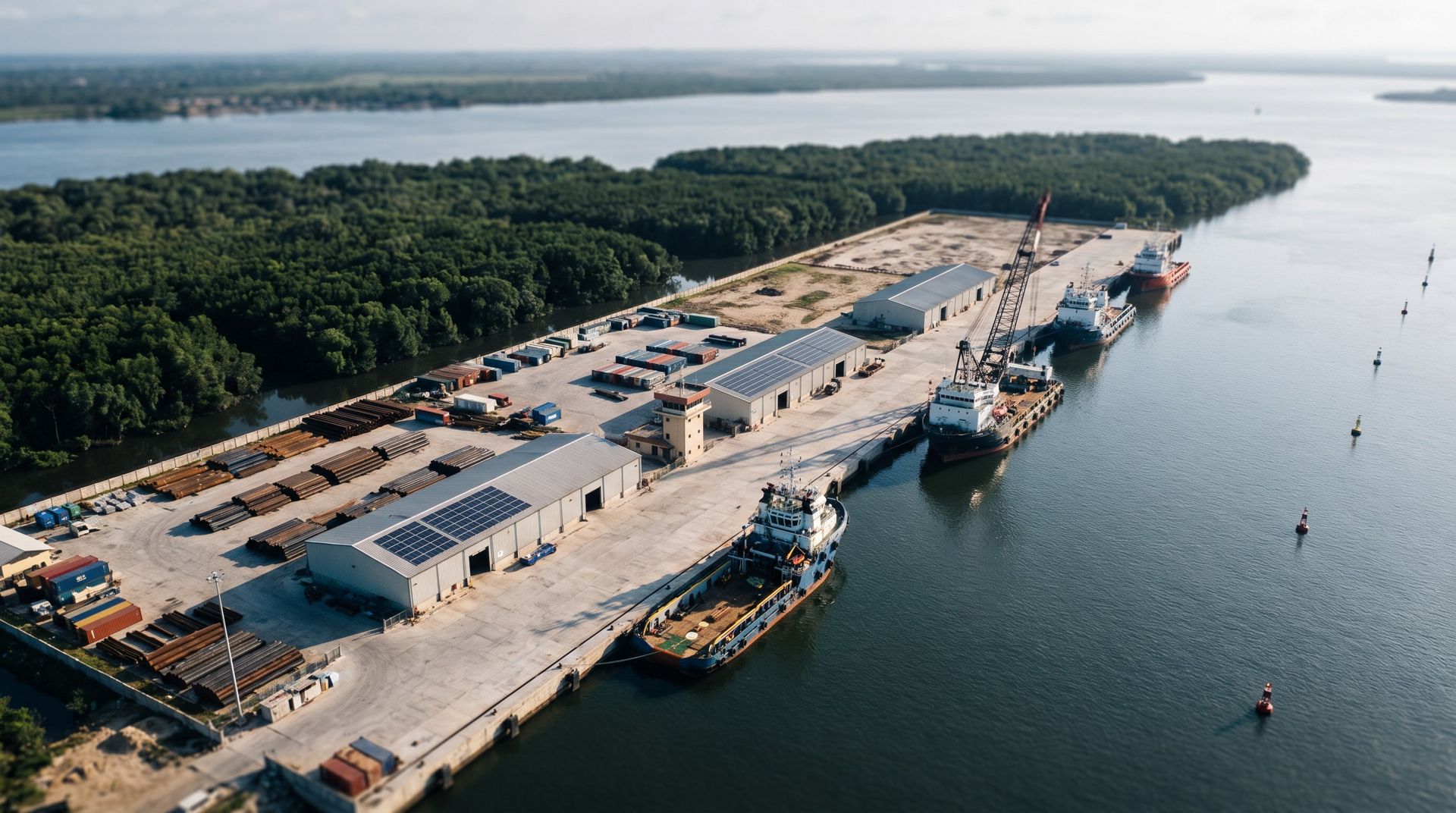
Iwokiri Marine Gateway, concept illustration
Phase 2Iwokiri Marine GatewayConcept illustration
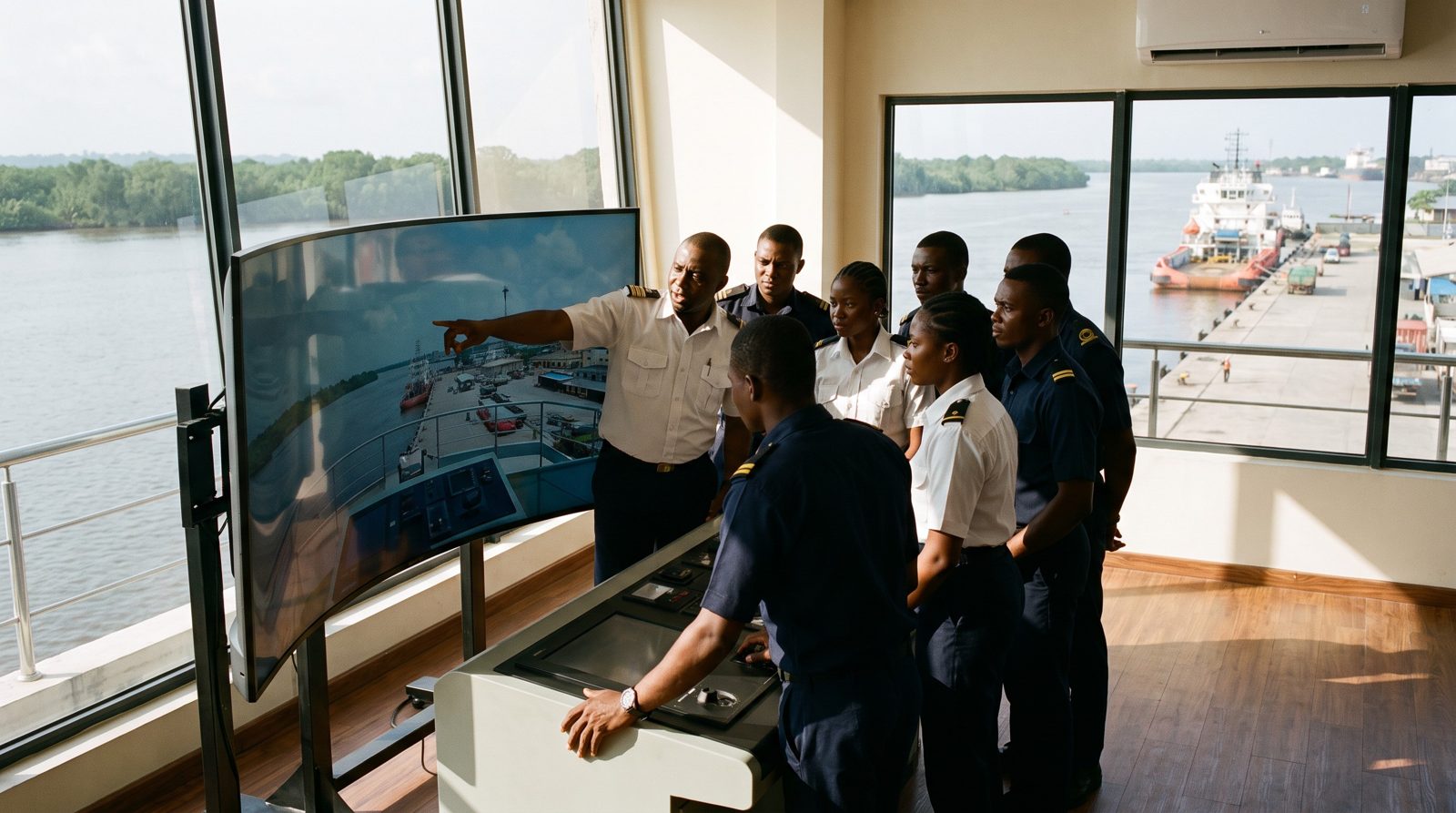
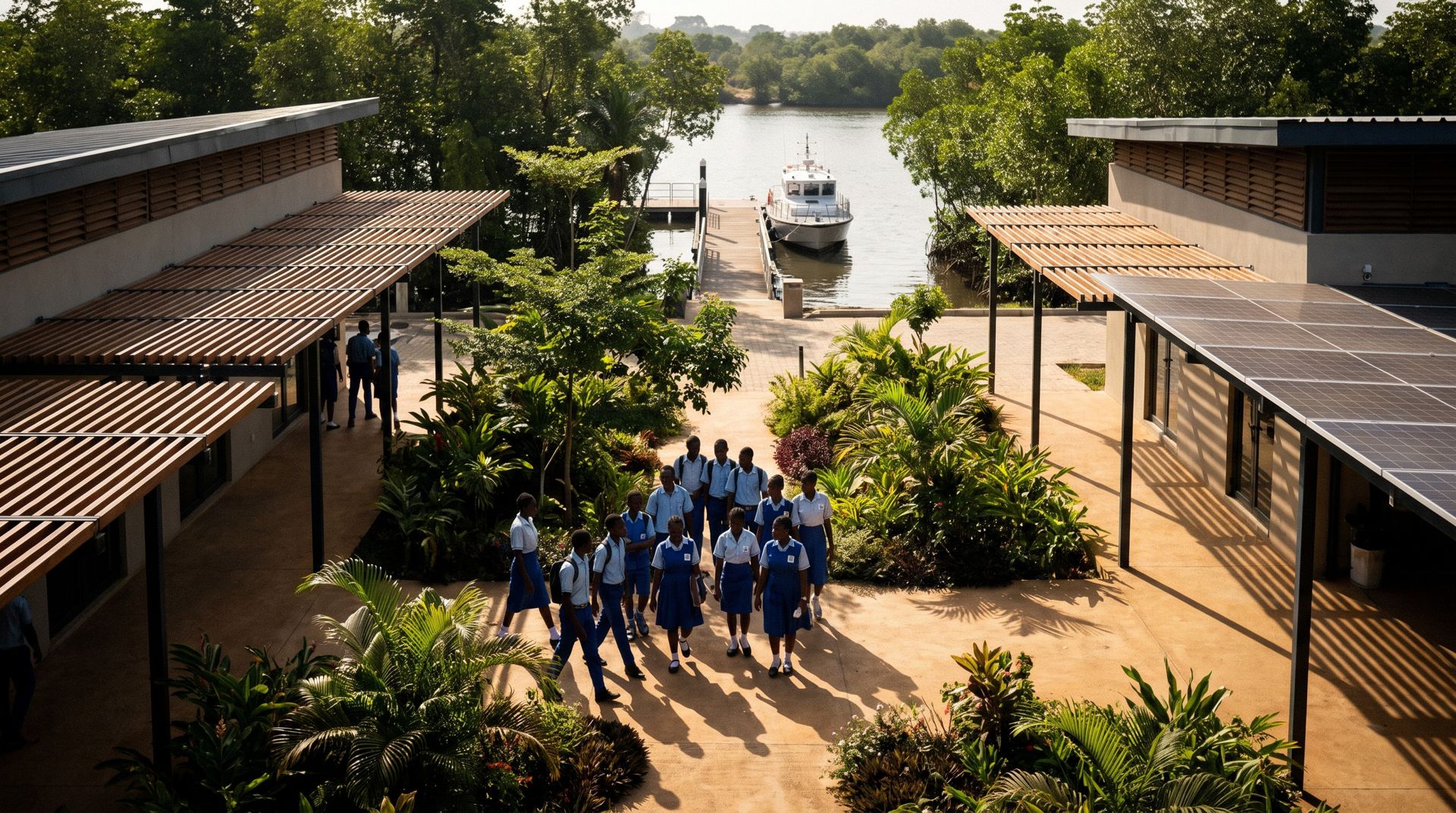
Maritime and Blue Economy Academy, concept illustration
Phase 3Maritime and Blue Economy AcademyConcept illustration
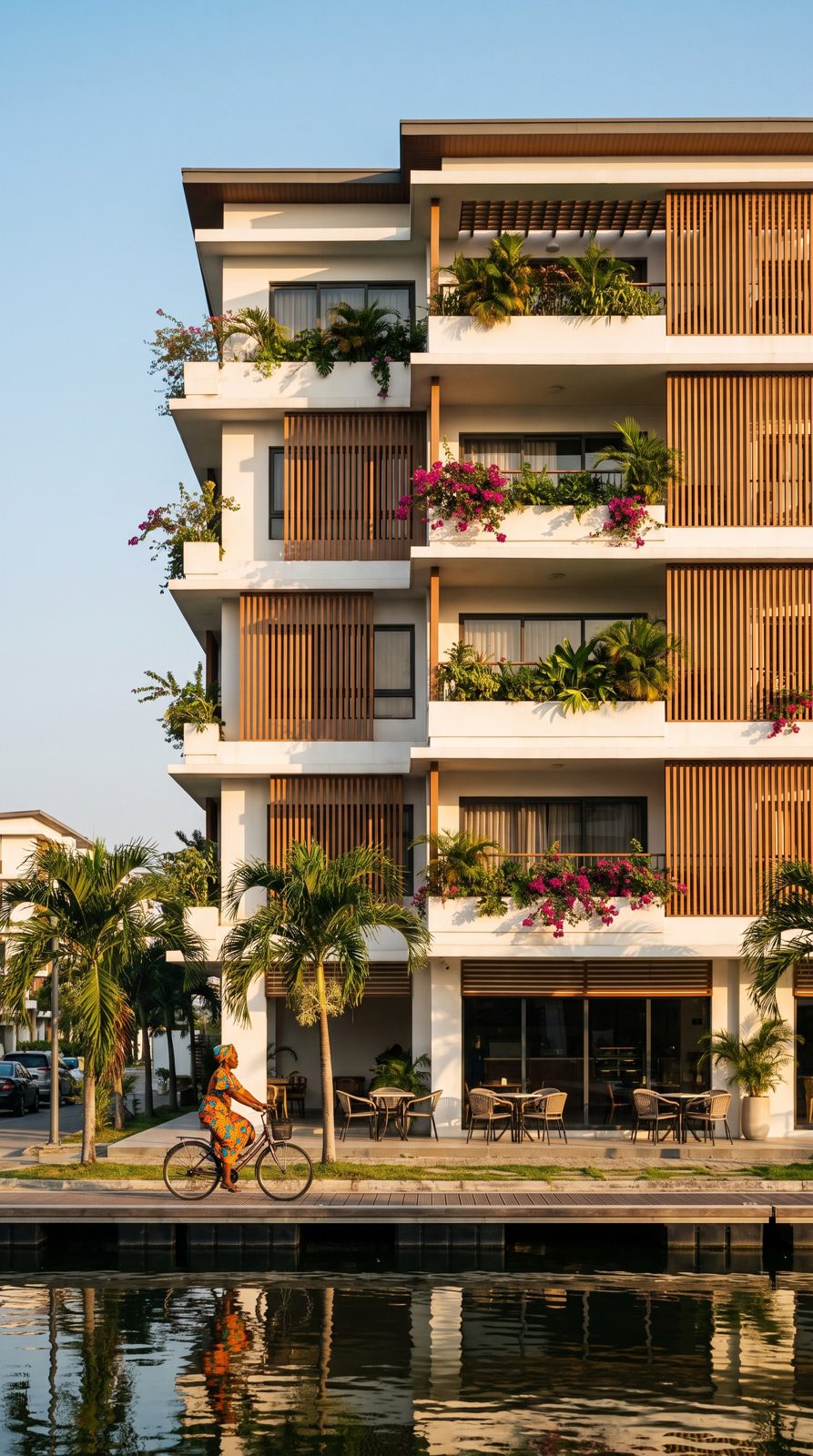
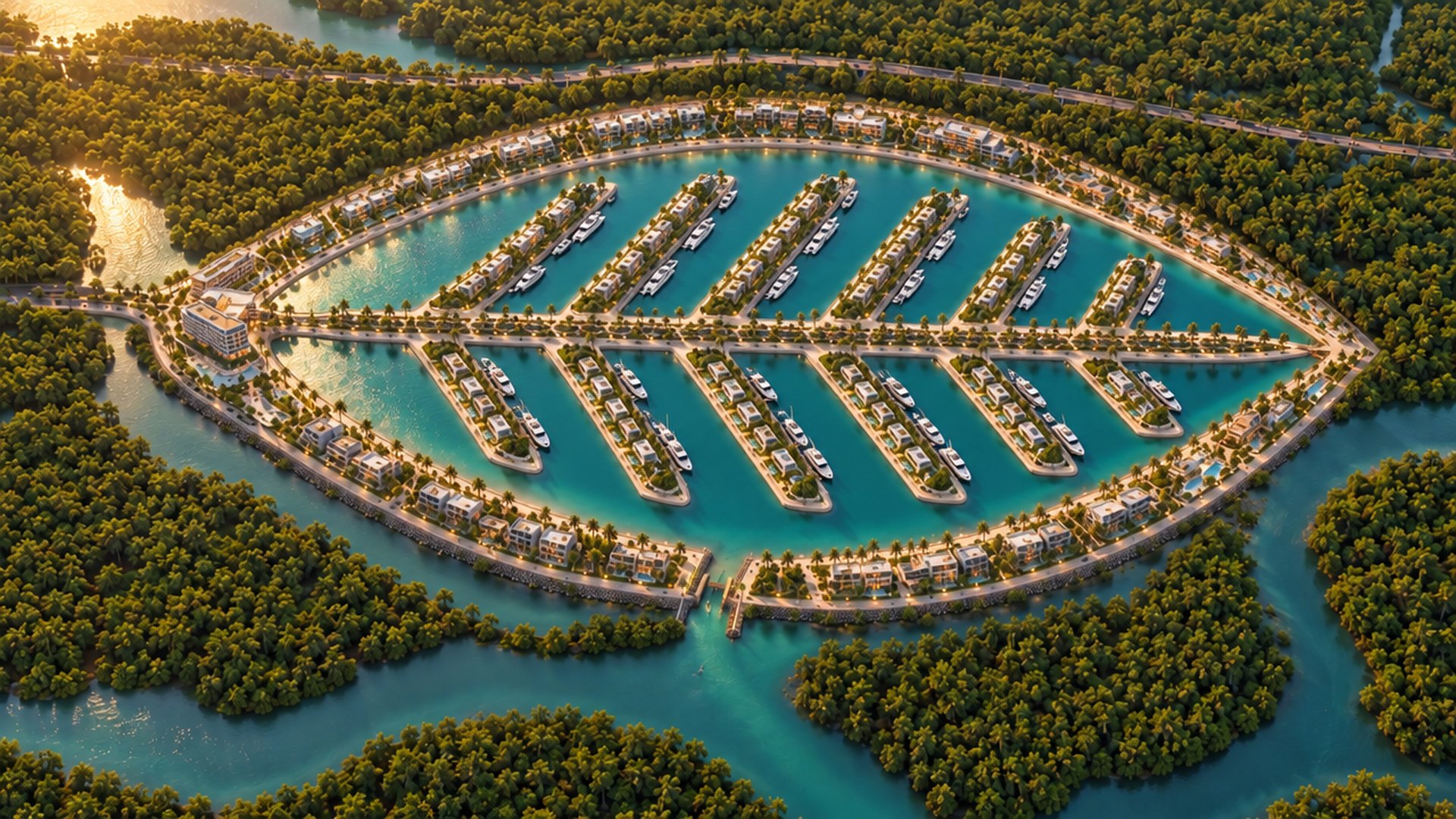
The Fronds marina, concept illustration
Phase 4The Fronds marinaConcept illustration

Films

See the plan in motion.

Flythrough of the Gateway · 42 s · narrated

Life at the Fronds

29 s · narrated. Homes, walks, parks and the harbour of the leaf-shaped marina, Phase 4.

The site plan, zone by zone

33 s · music only. Each zone lights up on satellite imagery of the site.

Iwokiri in 23 seconds

23 s · narrated, with captions. Where it is and what it could become.

Concept films made from AI-generated illustrations and satellite imagery, with AI narration and music. Not the real site, not surveyed. Not an offer of investment.

Location

Between the port and the town.

Iwokiri sits on the Bonny River in Ogu/Bolo, Rivers State. It is 3.4 km by boat from the quay at Onne and 5.7 km from Bolo Town. There is no road: access is by water, as it always has been.

Conservation already has roots here: a mangrove conservation and research centre was commissioned at Iwokiri in 2003.

3.4 km
to Onne port quay, by boat
5.7 km
to Bolo Town
Bonny River
river frontage
Rivers State
Nigeria
Bonny River3.4 km by boat5.7 kmOnne port quayBolo TownIwokiri
Schematic, not to scale. Distances from the community plan. See the satellite masterplan →

Getting there

From Iwokiri toStraight line
Onne port quayBy boat today; across the eastern arm of the estuary3.4 km
Bolo TownBy boat today; Bolo Link Road planned in Phase 35.7 km
Port Harcourt city centreVia Onne and the Eleme road network22.5 km
Bonny Island townDown the Bonny River23.9 km
NLNG plant, BonnyDown the Bonny River26.3 km
Port Harcourt International AirportVia Port Harcourt47.4 km

Straight-line distances measured from map coordinates. Travel routes and times will be confirmed by survey; today the site is reached by boat.

Opportunities

Eight ways in, in the right order.

Each opportunity is tied to a stage. Some are open now; others open only when the stage before them is working.

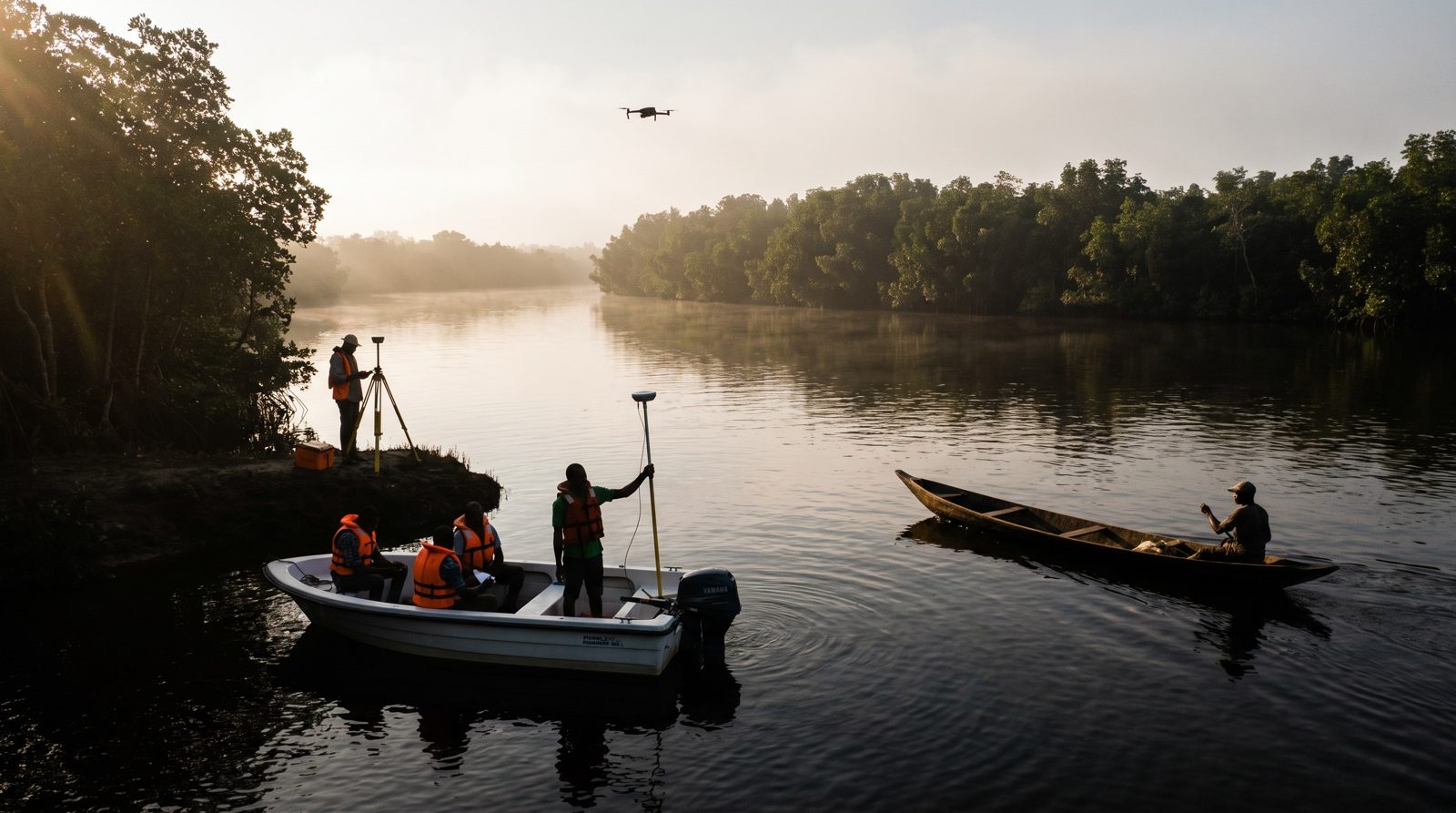
Prove the site, concept illustrationConcept illustration
Phase 0Open now

Prove the site

Whole site · 573 ha

We are looking for

  • Bathymetric, LiDAR and geotechnical survey
  • Impact assessment, legal and title advisers
  • Project-preparation and technical-assistance funders

The community brings

Community mandate, local knowledge, access, and a plan already drawn.
Fishers' Harbour and Seafood Hub, concept illustrationConcept illustration
Phase 1Open now

Fishers' Harbour and Seafood Hub

2 ha + harbour

We are looking for

  • Cold-chain and processing operators
  • Seafood buyers and exporters

The community brings

Active fishers, existing catch and a landing site already in use.

Blue carbon and the Mangrove Institute, concept illustrationConcept illustration
Phase 1Open now

Blue carbon and the Mangrove Institute

390 ha protected and restored

We are looking for

  • Blue-carbon and nature-finance partners
  • Universities and research institutes
  • Eco-tourism operators

The community brings

One of the largest community-held mangrove reserves on the Bonny estuary.

Iwokiri Marine Gateway, concept illustrationConcept illustration
Phase 2Anchor-tenant led

Iwokiri Marine Gateway

16 ha reclaimed · 730 m quay

We are looking for

  • Anchor tenant: offshore support, marine services or energy logistics
  • Port and terminal operators
  • Dredging and marine EPC contractors

The community brings

River frontage beside Onne on a long lease. Reclaimed once the anchor tenant signs.

Logistics, Energy and Free-Zone Park, concept illustrationConcept illustration
Phase 2–3Anchor-tenant led

Logistics, Energy and Free-Zone Park

38 ha

We are looking for

  • Bonded warehousing and logistics operators
  • Fabrication, barge repair and light industry

The community brings

Serviced plots behind the quay, released as tenants sign.

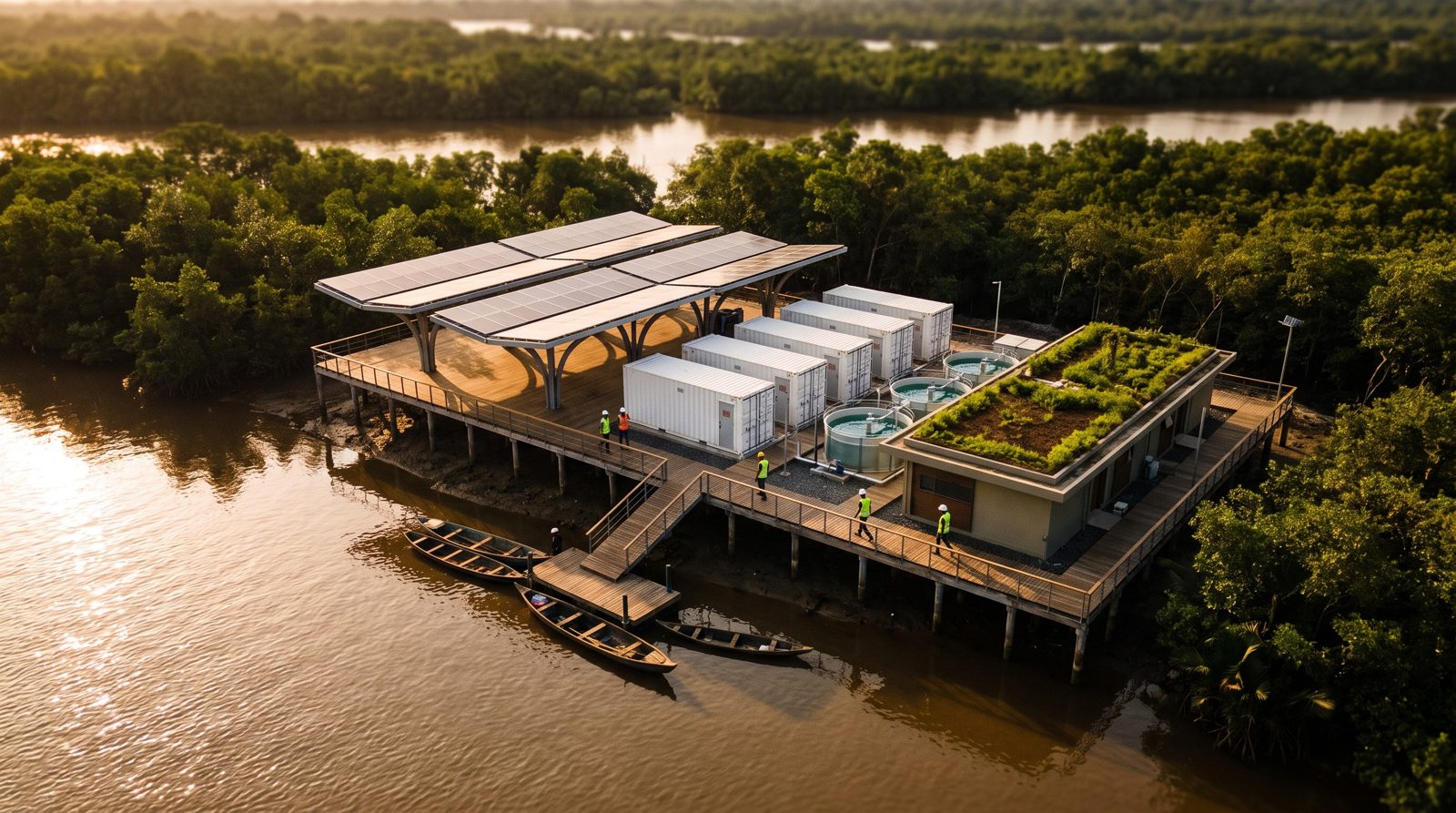
Energy and Utilities Hub, concept illustrationConcept illustration
Phase 1–3Open now

Energy and Utilities Hub

7 ha

We are looking for

  • Independent power producers
  • Solar, storage and water-treatment operators

The community brings

Anchor demand from the site, then Bolo Town as a second customer.

Iwokiri Town and Academy, concept illustrationConcept illustration
Phase 3Later

Iwokiri Town and Academy

24 ha

We are looking for

  • Housing and mixed-use developers
  • Maritime training institutions
  • Health and education partners

The community brings

A town for the people who work here, with a ready workforce to train.

The Fronds: marina, residences and resorts, concept illustrationConcept illustration
Phase 4Later

The Fronds: marina, residences and resorts

38 ha of islands and crescent · 53 ha lagoon

We are looking for

  • Hospitality brands and resort developers
  • Marina operators
  • Reclamation and coastal engineering partners

The community brings

A signature waterfront address, opened once the town and gateway are working.

Global investor landscape

Built to fit the world's infrastructure capital.

Each part of the plan is shaped to match how a different kind of investor already works in African ports and waterfronts.

Gulf

Port and terminal equity, energy and utilities, waterfront hospitality.

Sovereign and port-operator investment in African terminals is growing, for example PIF alongside COSCO in Red Sea Gateway Terminal, and AD Ports' 2026 MoU with Nigeria's blue-economy ministry.

Source: AD Ports ↗

United Kingdom

Engineering, dredging and marine contracting backed by export finance; development finance for the town and academy.

UK Export Finance backed a £746m rebuild of Lagos's Apapa and Tin Can ports in 2026, with a pipeline of Nigerian priority projects.

Source: GOV.UK ↗

United States

Debt, equity and political-risk insurance for energy, logistics and infrastructure.

US EXIM and Nigeria's NEXIM signed an MoU in 2025 to find bankable infrastructure; DFC has assessed jetty projects near Onne.

Source: EXIM ↗

China

Engineering, procurement and construction of quays, dredging and reclamation, with policy-bank finance.

Chinese contractors built Lekki Deep Sea Port and Tema Terminal 3 in Ghana, and reclaimed Port City Colombo.

Source: Baird Maritime ↗

Asia

Power, utilities and industrial tenants; long-term development finance.

Japanese development finance in Nigeria has focused on power and the grid, which matches Iwokiri's energy hub.

Source: Powerline ↗

Africa

Anchor finance for port-adjacent economic zones and the infrastructure that serves them.

IFC invested in the Lagos Free Zone next to Lekki port; Africa Finance Corporation and Afreximbank lead major Nigerian infrastructure finance.

Source: IFC ↗

These are examples of how such investors work in the region. None of the institutions named is a partner of Iwokiri or has been approached through this site.

Lessons from the world's waterfronts

What Palm Jumeirah, Colombo and Lagos teach Iwokiri.

Onne reclamation

Rivers State, Nigeria

About 200 ha built up with Bonny River sand, with settlement of soft ground monitored throughout. The closest technical model for Iwokiri.

Source: Boskalis ↗

Port City Colombo

Sri Lanka

269 ha reclaimed; the developer received land on a 99-year lease, not a sale. Proof that 'lease, never sell' can carry a major reclamation.

Source: Offshore Energy ↗

Palm Jumeirah

Dubai, UAE

The icon of reclaimed form. Later Palm designs added sea openings for water flushing; Iwokiri's lagoon is designed around tidal exchange from the start.

Source: Palm Islands ↗

Eko Atlantic

Lagos, Nigeria

A privately financed sea defence and city, but disputes over erosion next door show why neighbours must be studied and protected first.

Source: Haskoning ↗

Lekki Deep Sea Port

Lagos, Nigeria

Delivered by a Chinese contractor with development-bank finance, but fishing communities lost livelihoods. Iwokiri makes its fishers partners from day one.

Source: AfDB ESIA ↗

Forest City

Johor, Malaysia

Luxury towers for the wrong market, built ahead of demand, and damage to seagrass and mangrove. Why Iwokiri builds the working gateway first and the marina last.

Source: Domus ↗

Structure

You lease the land. You partner in the project.

Ownership of the land never moves. A Bolo Community Trust will own Bolo Holdings, the community's company. Bolo Holdings will take a stake in each project company, and partners join at that level, on leased land.

One project company per business keeps each venture separate: a fish hub partner is not exposed to the marine yard, and the other way round.

Bolo Community Trust

Holds the land and the community's interest

owns
Bolo Holdings

The community's company

holds a stake in each

Fish hub company

Marine yard company

Town company

Partners join here

Land is leased to project companies. It is never sold. The Trust and company are being set up in Stage 0.

Why Iwokiri

Not another land sale with a brochure.

LandAcquired, sold or compulsorily takenLeased. Stays with the Bolo Community, permanently
The people already thereMoved on or paid offFishers are partners. The settlement stays
How it is builtEverything dredged at once, on speculationFive phases. Reclamation waits for a signed tenant; the marina waits for a working town
EnvironmentMangrove cleared for plots75% of the land kept as mangrove; building goes on shoals and degraded marsh first
Who you deal withMany claimants, unclear consentA Community Trust and its company, set up before any lease is signed
What you are soldRenders and promised returnsA plain plan, published openly, with no promises of returns

Stakeholders

What Iwokiri means for you.

A long lease, a clear counterparty and a site near Onne.

  • 01Lease terms, not land purchase: you deal with the community's own company.
  • 02Project companies keep each venture separate.
  • 03The marine yard is built to a signed tenant's needs, not on speculation.
  • 04Terms are discussed directly, after an introductory meeting.

Process

From first letter to signed lease.

  1. 1

    Enquiry

    Write to us through the form below. Tell us who you are and what interests you.

  2. 2

    Introduction

    A first conversation with the Iwokiri committee, in person or online.

  3. 3

    Information

    Serious parties receive the fuller plan and background under a confidentiality agreement.

  4. 4

    Site visit

    A visit to Iwokiri by boat, with community representatives and fishers.

  5. 5

    Agreement

    Heads of terms with the community's company, approved through the Community Trust.

Questions

Straight answers.

Contacts

The right door for every conversation.

Investor relations

Investors, tenants, port operators and lenders

Government and agencies

Federal, Rivers State and local government; NPA, NIWA, NIMASA

Development and conservation partners

DFIs, foundations, universities and blue-carbon partners

Bolo Community and diaspora

Community members and Bolo people abroad

Enquire

Start a conversation.

Every enquiry is read by the Iwokiri committee. Tell us who you are, what you would like to do, and how you would like to work with the community.

  • Read by the committee, not a sales team
  • No obligation, no deposits, no land for sale
  • We reply by email

We use your details only to reply to you about Iwokiri. See our privacy notice.

This page describes a concept for community discussion. It is not surveyed, and it is not an offer of investment, a prospectus or an invitation to buy land or securities.